
The key to career fair success isn’t a better resume; it’s understanding and mastering the recruiter’s 30-second mental filter.
- Recruiters use a rapid « Yes/Maybe/No » triage system based on quick signals of competence and enthusiasm.
- Your 60-second pitch and digital presence must be perfectly aligned to send a clear, high-potential signal.
Recommendation: Focus on leaving a memorable impression of value through insightful conversation, not just submitting paper or collecting freebies.
The scene is familiar: a cavernous hall buzzing with nervous energy, hundreds of students clutching resumes, all vying for a few moments of a recruiter’s attention. The fear of being just another face in the crowd, another piece of paper in a gigantic stack, is palpable. Standard advice tells you to polish your resume, dress professionally, and have a firm handshake. While not wrong, this advice misses the entire point of the game you’re actually playing.
This isn’t just about presenting your qualifications. It’s a high-speed exercise in strategic communication. From a recruiter’s perspective, a career fair is a rapid-fire filtering mechanism. They are not there to discover your life story; they are there to identify signals of potential, quickly and efficiently. The vast majority of students send only noise—generic questions, rambling pitches, and a focus on free pens. The students who get callbacks are the ones who transmit clear, compelling signals.
But what if you could learn to think like a recruiter? What if you knew exactly what triggers a « yes » in their mind within the first minute? This guide pulls back the curtain on the recruiter’s playbook. We’re moving beyond the basics to give you the tactical edge needed to turn a fleeting interaction into a tangible opportunity. It’s time to stop being a passive participant and start being a strategic candidate who commands attention.
To navigate this complex environment, it’s crucial to understand the distinct challenges and strategies for each phase of the experience. This article breaks down the essential tactics, from crafting your initial pitch to acing the follow-up, ensuring you’re prepared for every critical moment.
Summary: Your Tactical Guide to Dominating Career Fairs
- Why Recruiters Spend Only 30 Seconds on Your Pitch and What They Look For?
- How to Craft a 60-Second Pitch That Hooks Recruiters Instantly?
- Virtual Career Fair or In-Person: Where Do You Have a Better Chance of Conversing?
- The Swag Mistake: Why Focusing on Freebies Signals You Are Not Serious?
- When to Send the LinkedIn Connection Request After Meeting a Recruiter?
- Why 70% of Best Internships Are Never Posted Publicly and How Career Centers Help?
- The Hidden Cost of Having Zero Digital Presence in 2024
- Mock Interviews Deconstructed: Turning Rehearsal Into Offers
Why Recruiters Spend Only 30 Seconds on Your Pitch and What They Look For?
That feeling that you’re being sized up in seconds? It’s real, and it’s backed by data. Your window of opportunity is brutally short. In fact, research from Tufts University reveals that recruiters have a 30 to 60-second window to screen you and your resume at a busy fair. In this timeframe, they are not deeply analyzing your experience; they are executing a rapid mental triage. Every candidate is subconsciously sorted into one of three piles: the immediate « Yes, » the « Maybe, » and the definitive « No. »
The « No » pile is for those who are unprepared, show a lack of enthusiasm, or have major qualification gaps. The « Maybe » pile is for candidates with a decent technical fit but who lack energy or whose cultural fit is unclear. Your one and only goal is to land in the « Yes » pile. This pile is reserved for students who radiate genuine enthusiasm, demonstrate strong qualifications, and—most importantly—signal that they are coachable and have done their homework.
The scale of this filtering process is staggering. Consider a real-world example from a major California career fair where a single tech employer collected over 3,000 resumes but only uploaded 120 to their internal recruitment system. That’s a 4% conversion rate from paper to system. This isn’t about being unfair; it’s about survival for recruiters drowning in volume. They are actively looking for clear signals that you are a serious, high-potential candidate worth their limited time and energy. Your pitch, your questions, and your non-verbal cues are all data points in this split-second evaluation.
Therefore, every second of your interaction must be engineered to prove you belong in that top-tier group. It’s not about having the perfect resume; it’s about making an impression that survives the brutal culling process that happens the moment you walk away.
How to Craft a 60-Second Pitch That Hooks Recruiters Instantly?
With only seconds to make an impact, your elevator pitch is not a summary of your resume; it’s a commercial for your potential. A weak, rambling pitch is the fastest way to get sorted into the « No » pile. A powerful pitch is concise, energetic, and connects your skills directly to the company’s needs or recent activities. It should be a conversation starter, not a monologue.
The formula is simple: Present + Past + Future. Start with the present (« I’m a junior majoring in Computer Science with a focus on machine learning »). Connect to your past (« This past summer, I developed a Python script that automated data analysis for a local startup, increasing efficiency by 20% »). Then, pivot to the future, connecting it directly to them (« I was really excited to see your recent launch of Project X, and I’m keen to apply my skills in predictive modeling to a team that’s innovating in the EV space »). This structure shows who you are, what you’ve done, and why you’re specifically talking to *them*.
This level of preparation sends a powerful signal of genuine interest. Take the case of Jacob, a mechanical engineering student who landed a Ford internship. As detailed in a success story, he researched companies, tailored his resume, and rehearsed his pitch weeks in advance. When he approached the Ford booth, he didn’t just ask about jobs; he mentioned a specific, recent EV project. This single detail demonstrated that he was not just another applicant, but a dedicated follower of the company’s work. The recruiter was impressed, and the conversation led to an interview.

As this example shows, a well-rehearsed and tailored pitch is your single most effective tool. It elevates you from a student asking for a job to a potential colleague proposing a solution. Practice it until it sounds natural and confident, not robotic. Your goal is to spark curiosity and make the recruiter think, « I need to talk to this person more. »
Ultimately, a great pitch doesn’t just tell them what you do; it shows them how you think and signals that you are a candidate who invests effort and comes prepared.
Virtual Career Fair or In-Person: Where Do You Have a Better Chance of Conversing?
The rise of virtual career fairs has changed the landscape, but not the fundamental rules of engagement. Whether you’re in a crowded hall or a digital lobby, your goal is the same: secure a meaningful conversation. Each format has distinct advantages and requires a tailored strategy. Don’t assume one is inherently « easier » than the other; instead, learn to leverage the unique dynamics of each.
In-person fairs offer the benefit of spontaneous interactions and the ability to read non-verbal cues. You can gauge a recruiter’s interest, build rapport through eye contact, and potentially have a more memorable, human connection. However, you’re also competing with ambient noise, long lines, and the physical fatigue of both yourself and the recruiter. Virtual fairs, on the other hand, eliminate geographical barriers and often provide tools to pre-book 1:1 meetings, allowing you to bypass virtual queues. While virtual career fairs have a 50% average participation rate, this can mean less direct competition in a given virtual booth if you are strategic.
The key is to understand that success metrics are surprisingly similar across both formats when a candidate is well-prepared. A tactical breakdown reveals how the core objectives translate. As shown in a comparative analysis of job fair metrics, the potential outcomes are comparable if you adapt your approach.
| Metric | In-Person Fairs | Virtual Fairs |
|---|---|---|
| Interview Conversion Rate | 45% receive interview invitations | Similar rates with proper preparation |
| Job Offer Rate | 24% receive offers | Comparable when using platform features effectively |
| Median Employer Participation | 109 employers (up from 98.5) | Unlimited capacity |
| Cost Reduction | Baseline | 60-70% cost reduction |
To succeed in a virtual fair, you must be proactive. Use chat features to share your LinkedIn profile or portfolio link during the conversation. Have a professional virtual background that can serve as a conversation starter. Test your technology 24 hours in advance to avoid last-minute glitches. Treat group information sessions as an opportunity to ask an insightful public question, and then reference it in your 1:1 chat to stand out.
Ultimately, the medium is secondary to the message. A strong, well-researched approach will cut through the noise, whether that noise is the buzz of a convention center or the silent distraction of a dozen other chat windows.
The Swag Mistake: Why Focusing on Freebies Signals You Are Not Serious?
It’s tempting. Booths are covered in colorful pens, stress balls, stickers, and candy. The instinct is to grab a handful of « swag » from every table. This is a critical error. From a recruiter’s perspective, a student who is more focused on collecting freebies than on having a meaningful conversation is broadcasting a clear, negative signal: « I am not serious. » It immediately cheapens the interaction and suggests you’re a tourist, not a potential hire.
The best candidates understand the concept of a value-leave-behind. Your goal is not to *take* something from the table, but to *leave* something valuable behind: a memorable impression, an insightful question, or a new perspective. You want the recruiter to remember the conversation, not the fact that you took the last branded water bottle. Being courteous is fine—if offered something, take one item politely. But never let it be the focus of your visit.
Top-tier institutions even advise employers on this dynamic. As MIT’s Career Advising & Professional Development office points out to companies, students at their level are environmentally conscious and appreciate items that are useful or unique, implying that generic junk is often ignored. This highlights a shared understanding that the transaction should be about substance, not stuff.
The best ‘swag’ items are useful or unique as MIT and its students are environmentally conscious.
– MIT Career Advising & Professional Development, Career Fair Advice for Employers
A more effective strategy is to treat the interaction with the respect it deserves. Avoid taking every free item, and certainly don’t play with toys or chew candy while speaking with a recruiter. This behavior signals immaturity and a lack of professional focus. Instead, channel that energy into demonstrating your genuine interest in the company’s work. A thoughtful question about a recent project is worth more than a thousand free pens.
By focusing on the quality of your engagement, you signal maturity, professionalism, and a clear-eyed view of your career goals—qualities that recruiters are desperately searching for.
When to Send the LinkedIn Connection Request After Meeting a Recruiter?
The career fair doesn’t end when you leave the building. The follow-up is a critical, and often fumbled, part of the process. Your goal is to reignite the connection while the memory of your conversation is still fresh in the recruiter’s mind. Timing and personalization are everything. Sending a generic LinkedIn request a week later is ineffective; it gets lost in the flood of similar, low-effort requests.
The optimal window is tight. In fact, career experts recommend sending thank-you notes and LinkedIn requests within 24 hours of the event. To be even more effective, adopt a « 10-minute rule. » As you walk away from a great conversation, take a moment to send the LinkedIn connection request from your phone. The key is to include a personalized note. A simple, « Hi [Recruiter Name], it was great speaking with you about [specific topic you discussed] at the [Fair Name] today. I’d love to stay connected, » is powerful. It immediately provides context and separates you from the 99% who send a blank request.
This digital handshake reinforces the positive impression you made in person. It shows you are organized, proactive, and genuinely interested. After connecting, don’t be a pest, but don’t be a ghost either. A smart strategy is to engage with the recruiter’s or company’s content a week or so before the fair, so your name is already familiar. After connecting, be patient; recruiters are inundated after a fair, so a delay in acceptance is normal. If your request isn’t accepted after a week or two, a follow-up email is a professional alternative.
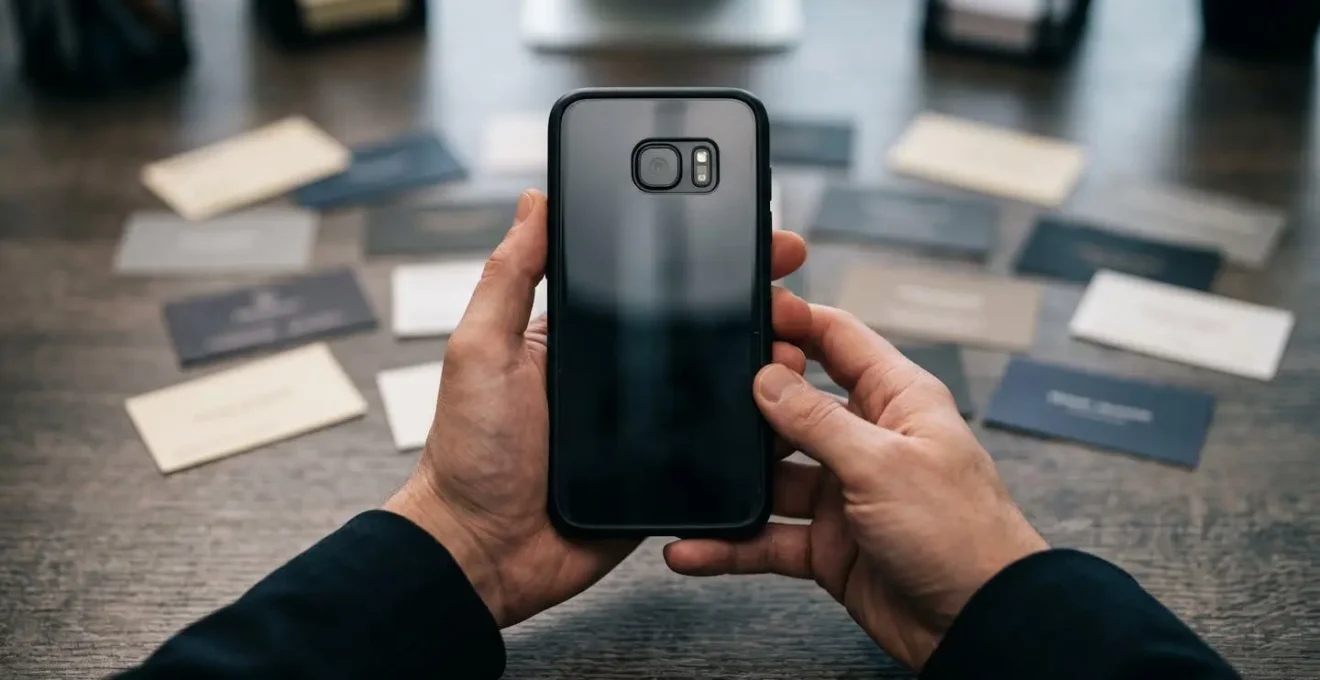
This digital follow-through is the final signal you send. It confirms the positive impression from your pitch and conversation, creating a cohesive and professional image. An immediate, personalized connection request is a power move that costs nothing but a few moments of your time.
It’s the closing act of your career fair performance, and a strong finish can be the deciding factor in whether you get the callback.
Why 70% of Best Internships Are Never Posted Publicly and How Career Centers Help?
One of the biggest misconceptions students have is that career fairs are only for the jobs listed on a company’s website. This is dangerously shortsighted. A massive portion of opportunities, especially top-tier internships, exists in the « hidden job market. » These are roles that companies are planning to hire for but haven’t posted yet, or roles they create for exceptional candidates they meet. Career fairs are your primary gateway to this exclusive inventory.
Why do companies operate this way? Because hiring is difficult and expensive. In fact, recent data shows that 69% of employers struggle with finding qualified candidates for full-time roles. They use career fairs not just to fill current openings, but for three primary strategic reasons: advertising current jobs, scouting talent for *future* needs, and building general brand visibility. That « future needs » category is where the hidden market lives. A recruiter might not have an open internship for you today, but if you make a stellar impression, you become their first call when a need arises in three months.
This is where your university’s career center becomes an invaluable ally. They often have established relationships with recruiters and access to exclusive job boards or referral networks that aren’t public. They know which companies are attending the fair to pipeline talent versus just filling immediate roles. They can provide intel on which recruiters to talk to and what those companies are *really* looking for. Ignoring your career center is like going into a competition without consulting your coach.
Your goal with every conversation should be to demonstrate such high potential that the recruiter is motivated to either find or create a place for you, whether that role is posted online or not.
The Hidden Cost of Having Zero Digital Presence in 2024
In today’s hiring landscape, your physical resume is only half of the story. The first thing a recruiter does after a positive interaction is Google your name or look you up on LinkedIn. Having a nonexistent, unprofessional, or inconsistent digital presence is a major red flag. It signals that you are either not serious about your professional brand or, worse, that you are hiding something. The cost of this digital void is missed opportunities.
Think of your digital presence as the digital echo of your in-person pitch. Your LinkedIn profile shouldn’t just be a static copy of your resume; it should be a dynamic, professional landing page that reinforces the story you told at the fair. It needs a professional headshot, a headline that mirrors your elevator pitch, and a featured section showcasing your best projects. This alignment is directly correlated with success; the NACE’s 2024 Student Survey reveals that 45% of prepared students receive interview offers, and digital readiness is a huge part of that preparation.
For technical roles, a link to a clean GitHub profile or a simple portfolio website is non-negotiable. It provides concrete proof of your skills in a way a one-page resume never can. The absence of this proof creates doubt. Before you ever step foot in the fair, you need to conduct a thorough audit of your online footprint. What comes up when you Google yourself? Is your email signature professional and does it include your LinkedIn URL? These small details create a seamless, professional narrative that builds trust and confidence in your candidacy.

Action Plan: Your Digital Presence Audit
- Update your LinkedIn profile to mirror your elevator pitch exactly.
- Showcase your best work by adding relevant projects to your LinkedIn’s « Featured » section.
- Ensure your resume is ATS-optimized and that its content perfectly matches your online profiles for consistency.
- For technical roles, create and link a simple portfolio website or a well-organized GitHub profile.
- Google your own name and take steps to clean up or privatize any unprofessional content that appears.
It’s the silent validator of your in-person claims, and in 2024, it’s a cost you can’t afford to ignore.
Key Takeaways
- Think Like a Recruiter: Success hinges on understanding their rapid « Yes/Maybe/No » mental triage system and sending clear signals of high potential.
- Signal, Don’t Shout: Your 60-second pitch, digital presence, and follow-up must work in concert to tell one consistent, professional story.
- Value Over Volume: Focus on quality conversations and leaving a memorable impression of value, not on collecting the most swag or submitting the most resumes.
Mock Interviews Deconstructed: Turning Rehearsal Into Offers
Preparation is what separates the tourists from the serious candidates, and nothing prepares you for the pressure of a career fair like deliberate, high-stakes rehearsal. Mock interviews and pitch practice sessions are not about memorizing a script; they are about pressure-testing your message and building the muscle memory to handle unexpected situations with poise. This is where you turn rehearsal into offers.
Effective practice goes beyond reciting your pitch in the mirror. You need to simulate the chaotic environment of the actual fair. Practice in a noisy cafe or a busy student center to get used to distractions. Record yourself on video to analyze your body language and identify verbal fillers like « um » or « like. » Most importantly, practice the strategic pivot. What do you do when a recruiter interrupts you or says, « We’re not hiring for that role right now »? Instead of shutting down, you pivot: « I understand. Given your position in the industry, which other companies here today do you think are leading the way in [your field of interest]? » This turns a rejection into an intelligence-gathering mission and signals incredible composure.
This ability to adapt is what recruiters notice. A brief five-minute discussion, even one that starts with a rejection, can transform into an opportunity. One student’s story highlights how her preparation for a mid-sized tech company discussion paid off. Her poise during a challenging conversation turned a potential dead-end into an interview invitation two weeks later. She was ready not just to deliver her pitch, but to react strategically. To build this level of readiness, you should:
- Practice your pitch until it consistently falls within the 30-60 second target.
- Rehearse handling interruptions gracefully without losing your train of thought.
- Ask a friend who is unfamiliar with your field to listen to your pitch; if they don’t understand it, it’s not clear enough.
- Role-play scenarios where you receive a negative or non-committal response.
The goal is to be so well-rehearsed that you can be completely present and authentic in the moment, ready to handle whatever comes your way. The floor is yours. Take these strategies, get prepared, and don’t just attend the next career fair—own it.